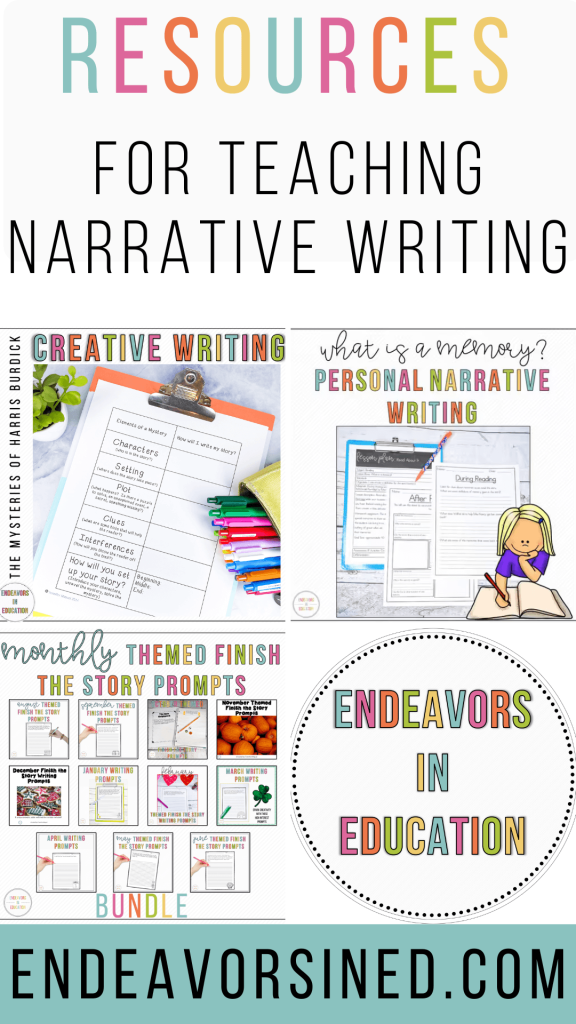


Narrative writing is important for children to develop. It builds literacy skills and also helps students express creativity, reflect on experiences, and understand story structure. However, teaching narrative writing in elementary school can feel overwhelming if you’re not sure where to begin. Here’s a step-by-step guide to help you teach narrative writing with confidence and effectiveness.
Note: As an Amazon Associate, I earn from qualifying purchases.
1. Start with Mentor Texts
The first step in teaching narrative writing is to begin by exposing students to a variety of narrative texts. Choose picture books, short stories, and even excerpts from chapter books that model strong storytelling. As you read aloud, point out the key elements of a narrative:
- Characters
- Setting
- Problem/conflict
- Events
- Solution/resolution
Use anchor charts to list story elements and refer back to them throughout the unit.
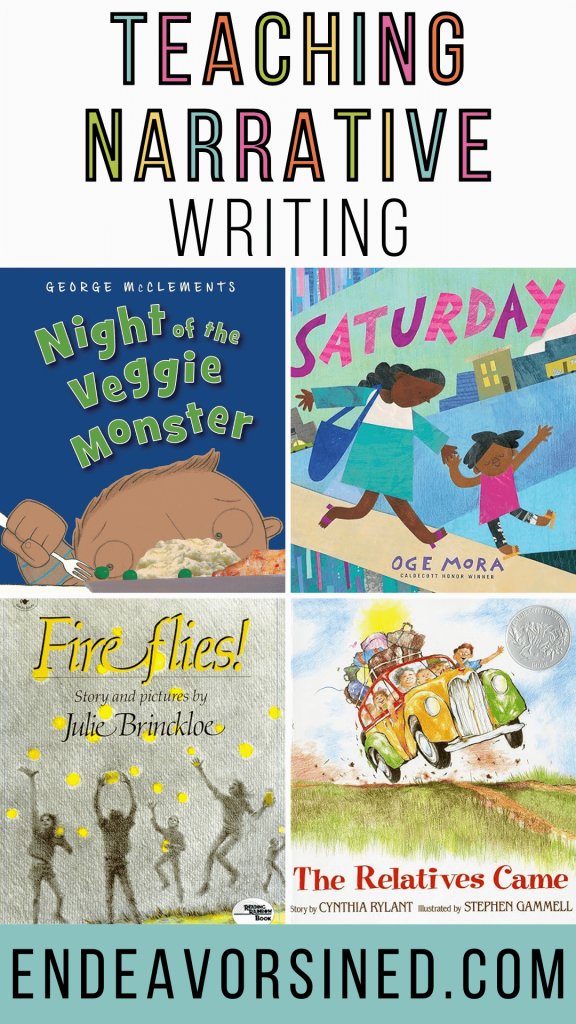
Suggested books for teaching narrative writing:
Mentor Text for Personal Narratives-
These books are great for modeling real-life experiences and reflective storytelling.
- Knuffle Bunny: A Cautionary Tale by Mo Willems
- Fireflies! by Julie Brinckloe
- Bigmama’s by Donald Crews
- A Chair for My Mother by Vera B. Williams
- The Relatives Came by Cynthia Rylant
- Come On, Rain! by Karen Hesse
- Shortcut by Donald Crews
- Saturday by Oge Mora
Mentor Texts for Small-Moment Writing-
These stories zoom in on a focused event. They are perfect for showing how to stretch a moment with detail.
- Owl Moon by Jane Yolen
- Roller Coaster by Marla Frazee
- The Snowy Day by Ezra Jack Keats
- Night of the Veggie Monster by George McClements
- The Big Orange Splot by Daniel Manus Pinkwater
Mentor Texts with Strong Voice or Dialogue-
Use these when teaching narrative writing that includes character, voice, and tone.
- My Rotten Redheaded Older Brother by Patricia Polacco
- Diary of a Worm by Doreen Cronin
- Lilly’s Purple Plastic Purse by Kevin Henkes
- Pigeon series by Mo Willems
- Alexander and the Terrible, Horrible, No Good, Very Bad Day by Judith Viorst
Mentor Texts to Teach Description and Sensory Details-
Helpful when teaching narrative writing techniques, like showing rather than telling.
- All the Places to Love by Patricia MacLachlan
- Stellaluna by Janell Cannon
- The Salamander Room by Anne Mazer
- Wilfrid Gordon McDonald Partridge by Mem Fox
- Where the Wild Things Are by Maurice Sendak
Mentor Texts for Imaginative and Creative Narratives-
Use these to inspire original fiction and fantasy when teaching narrative writing beyond personal experience.
- If I Built a Car by Chris Van Dusen
- The Mysteries of Harris Burdick by Chris Van Allsburg
- What Do You Do With an Idea? by Kobi Yamada
- The Paper Bag Princess by Robert Munsch
- Cloudy with a Chance of Meatballs by Judi Barrett
2. Break Down the Writing Process
Teach narrative writing in small, manageable chunks. A suggested sequence might look like this:
- Brainstorming ideas: Encourage students to write about something they’ve experienced or imagine a fun adventure.
- Planning with graphic organizers: Use story maps or beginning-middle-end charts to help students plan.
- Drafting: Focus on getting ideas down without worrying too much about spelling or grammar.
- Revising and editing: Teach mini-lessons on adding sensory details, strong verbs, or dialogue.
- Publishing: Let students rewrite their final draft neatly or type it for a class book or bulletin board display.
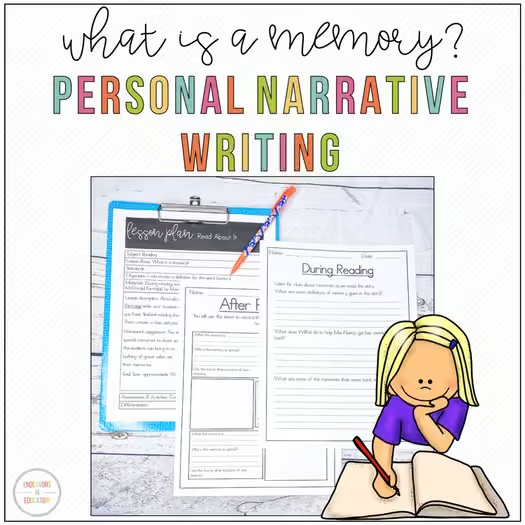
If you want narrative writing broken down for you, check out these narrative writing assignments that are based on the books above.

3. Teach Story Structure Explicitly
When teaching narrative writing, students need a clear understanding of narrative structure. Use anchor charts, interactive notebooks, and sentence frames to help them internalize structure. A basic narrative structure includes:
- Introduction (Beginning): Who is the story about? Where does it take place?
- Middle: What problem happens? What events led to solving it?
- Ending: How is the problem resolved?
You can have students act out stories or draw comic strips to reinforce this flow.
4. Encourage Voice and Creativity
Teaching narrative writing is the perfect opportunity for students to let their personality shine. Encourage them to use dialogue, exaggeration, humor, and description. Celebrate unique ideas and risk-taking.
Try prompts like:
- “I woke up and discovered I could fly…”
- “A talking dog followed me home…”
- “The day everything turned into candy…”
These open-ended prompts promote creativity while giving reluctant writers a fun starting point.
If you’re looking for monthly themed story starters for teaching narrative writing, check out my monthly themed story starter bundle. You can save by purchasing the bundle or buying the months you need separately!

5. Provide Consistent Feedback
Use rubrics or checklists to guide your feedback and keep it focused. Highlight strengths first, then gently point out one or two areas for growth. Peer conferencing can also be powerful—teach students how to give constructive feedback to one another.
Check out these free peer and self-editing checklists for your students to use while editing their narrative writing.
6. Make it Fun
Incorporate games, story dice, picture prompts, or partner writing challenges while teaching narrative writing. Students are more engaged when writing feels like play rather than work.
Narrative writing allows students to take ownership of their ideas while practicing important literacy skills. By modeling great storytelling, breaking the writing process into steps, and creating a supportive environment, you’ll help your elementary students become confident, creative writers.
If you’re looking for writing tips, check out this blog post.